By: Byaruhanga Frank | Communications Officer.
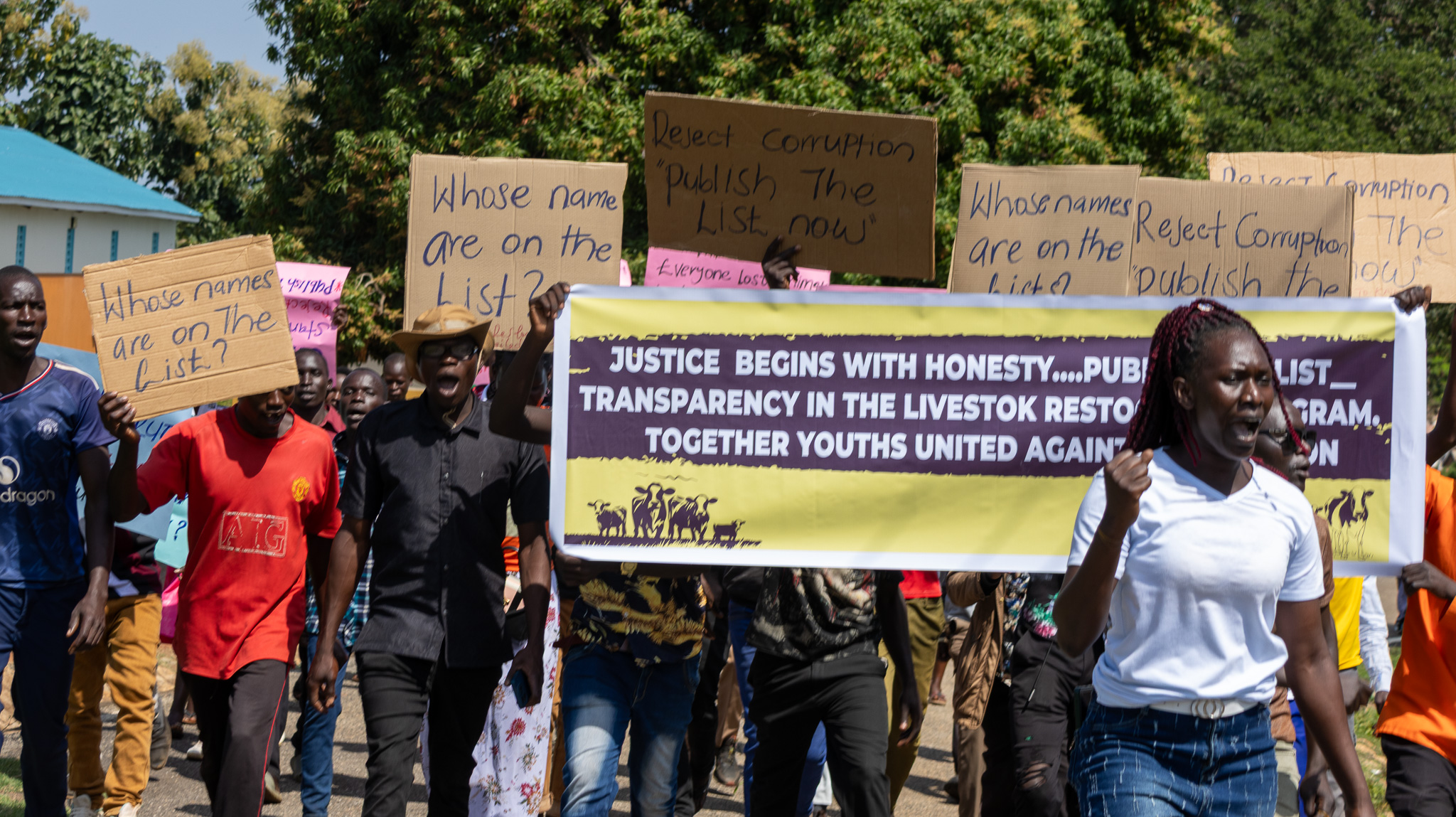
Young people marched to the district headquarters in Dokolo chanting “youth Power” and refusing to leave until officials produced the list of beneficiaries under cattle restocking program. By the end of the day, district leaders had agreed to suspend further payments and publish the names of everyone who had already received money. A rare, immediate concession won by sustained public pressure from the district’s youth.
Dokolo district was allocated roughly 2.6 billion shillings to support 527 households. This was later reduced to 497 under revised guidelines with each household expected to receive five animals or a 5-million-shilling cash equivalent. The intended beneficiaries were the region’s most vulnerable: orphans, elders, formerly abducted persons, and unemployed youth. But as the list began to take shape, young people in Dokolo say a very different picture emerged.
“We Only See some district leaders and Their Relatives” – Activist
At the peaceful protest, one youth leader described what community members were finding as they scrutinized early beneficiary rolls. “We have received the list, and from the very first view, there are very many problems,” he told the members. “Those who were supposed to benefit are not getting it because leaders are ahead of us.”
Activists echoed the same complaint that parish chiefs, LC2s, and their relatives were dominating the beneficiary lists meant for orphans, elders, abductees, and jobless youth. “We only see care persons, LC2s and their close relatives benefiting from this program,” one protester said, pointing out the irony that an ordinary villager would struggle to raise even the 300,000 shillings as demanded informally by leaders just to access a 5-million-shilling package.
 It was a demand that cut to the heart of what many have been raising that programs designed to lift up the most vulnerable are instead being captured by the very leaders meant to administer them.
District officials, under pressure, released figures that only sharpened the youth’s suspicions. Of the 497 revised beneficiaries, only 492 households had been profiled. Of those, 218 were said to be in the final stage of receiving funds, while 196 households had already been paid 5 million shillings each. The youth wanted to know who exactly made up that list of 196 and how many were relatives, uncles, daughters of parish chiefs rather than the vulnerable groups the program was designed for.
This is a concern that has surfaced elsewhere in the region. Reporting from Gulu district found similar allegations of favoritism and manipulated beneficiary lists, with a parliamentary committee hearing claims that some local leaders had inserted themselves, their spouses, and relatives onto rolls meant for widows, the elderly, people with disabilities, and former abductees. In Agago district, authorities went as far as nullifying beneficiary lists from most parishes after investigators uncovered nepotism and exclusion of legitimate beneficiaries, with more than a dozen parish chiefs facing possible disciplinary and legal action.
What set the Dokolo demonstration apart was that it was led by young people. This was not a protest organized by politicians or NGOs. It was young people, many of them excluded from a program meant partly for unemployed youth, who organized, marched, and refused to back down until they got answers.
“It is not only youth who do not benefit,” one youth representative clarified during the standoff, pushing back against the idea that this was a narrow, self-interested complaint. “Where are the veterans and the abductees?” The protest, in other words, was framed as a demand for the whole program to work as intended, not just a grab for youth inclusion.
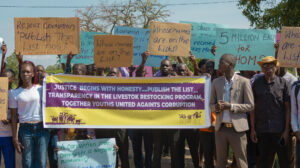
Their persistence paid off. By the end of the demonstration, the Resident District Commissioner and the LC5 chairperson had met with protesters directly. District leadership agreed to write to the ministry requesting an immediate halt to further payments in Dokolo until the list can be verified. Officials also produced a stamped document from the Chief Administrative Officer’s office listing everyone who had benefited parish by parish a document youth leaders vowed to post at trading centers, notice boards, and gathering places across the district so residents could see it for themselves.
“List of beneficiaries of any government program is a public document,” one activist reminded the crowd. “Had it not been due to our demand, would this list come out?”
This youth action is why accountability mechanisms matter long before a program reaches its intended beneficiaries. When beneficiary lists are drawn up quietly at the parish level and payments move through the system without public disclosure, it creates exactly the conditions for capture by those closest to power. Publishing lists, holding open verification exercises, and inviting community oversight are not bureaucratic afterthoughts; they are the difference between a program that restores livelihoods for war-affected families and one that quietly enriches an already well-connected few.
Leaders entrusted with public funds owe communities more than promises they owe them the paperwork, the process, and the willingness to be questioned in public. Dokolo’s youth showed that when transparency isn’t volunteering, it can still be demanded.
The suspension of payments in Dokolo is a first step, not a resolution. The youth called up community members to visit their sub-county headquarters and notice boards to review the published beneficiary lists once available, and to report any names that appear to have bypassed the program’s intended criteria.